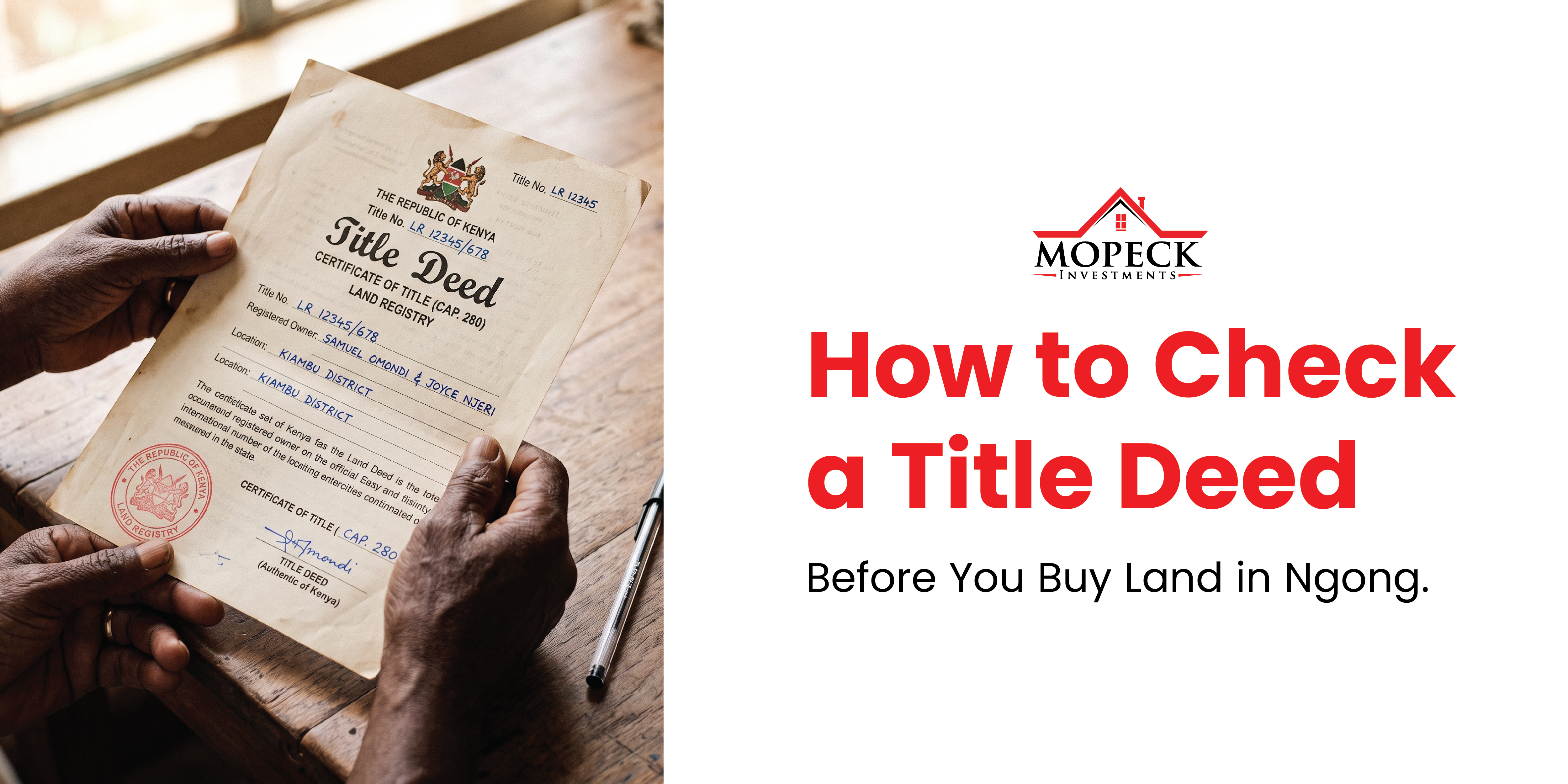




Buying land is one of the most important financial decisions anyone can make. In Kenya, where land continues to appreciate in value, it’s crucial to ensure that what you’re purchasing is legitimate, secure, and free from disputes. Performing due diligence protects you from fraud, ownership conflicts, and costly mistakes. Below is a step-by-step guide, based entirely on Kenyan laws and government institutions, on what to check before purchasing land.
1. Verify Land Ownership at the Ministry of Lands
Before committing to any land deal, the first step is confirming the authenticity of the title deed.
According to the Land Registration Act, No. 3 of 2012, every parcel of land must be registered, and the land registry records are open to the public. You can conduct an official land search through the Ministry of Lands and Physical Planning or via the ArdhiSasa online platform.
Reference: Land Registration Act, 2012 (Kenya Law)
Tip: The official search report shows the registered owner, land size, encumbrances (like loans or caveats), and the parcel’s history.
2. Confirm the Land’s History with the National Land Commission (NLC)
The National Land Commission (NLC) oversees public land and advises on land administration. Engaging with the NLC or reviewing their databases helps you confirm whether the land in question is public, private, or community-owned.
This step ensures you don’t buy public land, which cannot be legally sold without proper authorization.
Reference: National Land Commission Act, 2012; landcommission.go.ke
3. Check the Survey Maps and Boundaries
Every parcel must have a valid survey plan number (F/R number). Request a copy from the Directorate of Surveys, a department under the Ministry of Lands.
Under the Survey Act (Cap 299, Laws of Kenya), only licensed surveyors are authorized to mark, subdivide, or verify boundaries.
Reference: Survey Act (Revised 2020)
Tip: Hire a government-licensed surveyor to confirm that the physical beacons on the ground match the map.
4. Inspect Zoning and Land Use Regulations
Before purchasing, verify how the land is zoned and what it can be used for (residential, agricultural, or commercial). These details can be obtained from the County Physical Planning Department.
The Physical and Land Use Planning Act, 2019 gives counties authority over zoning, approvals, and development control.
Reference: Physical and Land Use Planning Act, 2019 (Kenya Law)
5. Conduct an Environmental Assessment (If Necessary)
If you plan to develop or subdivide the land, the National Environment Management Authority (NEMA) may require an Environmental Impact Assessment (EIA).
This ensures that the land use aligns with sustainable environmental practices and avoids penalties later.
Reference: Environmental Management and Coordination Act, 1999 (EMCA)
6. Verify Seller’s Identity and Documents
Confirm that the person selling the land is indeed the registered owner or an authorized representative. Request:
Original title deed (verify it matches the official search)
National ID and KRA PIN
Sale agreement and consent from relevant authorities (e.g., Land Control Board for agricultural land)
Reference: Land Control Act (Cap 302)
7. Obtain Land Control Board (LCB) Consent
For agricultural land, the Land Control Board, a local government body, must approve the sale. Without this consent, the transaction is legally void.
Reference: Land Control Act, Cap 302, Laws of Kenya
8. Work with a Licensed Advocate
Finally, always engage a qualified advocate to draft and review your sale agreement. A lawyer will ensure the transaction complies with the Land Registration Act and that payment is made only after legal transfer.
Conclusion
Due diligence is not a formality, it’s your first line of defense against fraud and future disputes. Always verify ownership, boundaries, and legal permissions before paying for any land.
By following the steps outlined under Kenya’s land laws—guided by the Ministry of Lands, National Land Commission, and Survey Department, you ensure your investment is safe, legal, and fully compliant.
References
Land Registration Act, No. 3 of 2012 – Kenya Law
National Land Commission Act, 2012 – Parliament of Kenya
Survey Act, Cap 299 – Kenya Law
Physical and Land Use Planning Act, 2019 – Kenya Law
Land Control Act, Cap 302 – Kenya Law
Environmental Management and Coordination Act, 1999 – NEMA Kenya