



Land banking , buying undeveloped land and holding it for future appreciation , is fast emerging as one of the most powerful wealth-building strategies for Kenyan investors.
In a property market where infrastructure, urbanisation, and government projects are reshaping growth corridors, land banking offers both local and diaspora investors an affordable, long-term path to financial growth.
Whether you’re buying land in Kenya for development, speculation, or retirement, understanding how to bank land strategically could help you secure financial freedom and Mopeck Investments is here to guide you every step of the way.
What Is Land Banking?
Land banking is the deliberate purchase of raw or undeveloped land with the goal of holding it until its value appreciates due to external developments such as new roads, zoning changes, or expanding urban boundaries.
Unlike property flipping or immediate construction, land banking is about patience and foresight. Investors “bank” land now, when prices are low, and sell or develop it later when the area’s value rises.
For example, an investor who purchased a half-acre in Kitengela in 2015 might have seen prices rise significantly after the Nairobi Expressway and Southern Bypass improved accessibility even without developing the land.
In simple terms, it’s a “buy early, wait smart” strategy.
How Investors Use Land Banking in Kenya
1. Buying Strategically Located Land
Most investors start by identifying growth corridors , areas projected for infrastructural, industrial, or residential expansion. Counties like Kiambu, Kajiado, Machakos, Nakuru, and Kisumu are popular due to ongoing government projects and population growth.
2. Holding for Appreciation
After purchase, investors typically hold the land for 5 to 15 years, allowing time for surrounding infrastructure and services to mature.
3. Exiting via Sale, Development, or Rezoning
Sell: Cash out after value appreciation.
Develop: Build rental units, gated communities, or commercial spaces.
Rezone: Convert agricultural land into residential or commercial use for higher returns.
Example Scenarios
A diaspora investor buys one acre in Nakuru County in 2025, holds until 2032, and sells at triple the purchase price after infrastructure projects mature.
A local developer banks land near Konza Technopolis, waits for technology firms to settle in, then develops rental units for staff - earning both capital gains and rental income.
Land banking remains one of Kenya’s most consistent long-term investment strategies, often outperforming short-term speculative ventures.
Why Consider Land Banking in Kenya
1. Rapid Urbanisation
Kenya’s urban population grows at over 4% annually (KNBS, 2023). Cities like Nairobi, Nakuru, and Kisumu are expanding outward, increasing demand for surrounding land.
2. Major Infrastructure Projects
The Nairobi Expressway, Dongo Kundu Bypass, Standard Gauge Railway, and Konza Smart City have transformed previously overlooked areas into investment hotspots.
3. Strong Long-Term Returns
According to Cytonn Real Estate (Q1 2024), strategically acquired land in developing corridors has historically appreciated by 10–20% annually, depending on location and development timelines.
4. Low Holding Costs
Unlike developed property, undeveloped land has minimal maintenance expenses mainly land rates and security making it ideal for investors who prefer low overheads.
5. Accessible Entry Points
You can start small , for example, ⅛-acre plots , and scale up as your capital grows. Land banking is one of the few real estate investments that allows flexible entry.
Risks & How to Mitigate Them
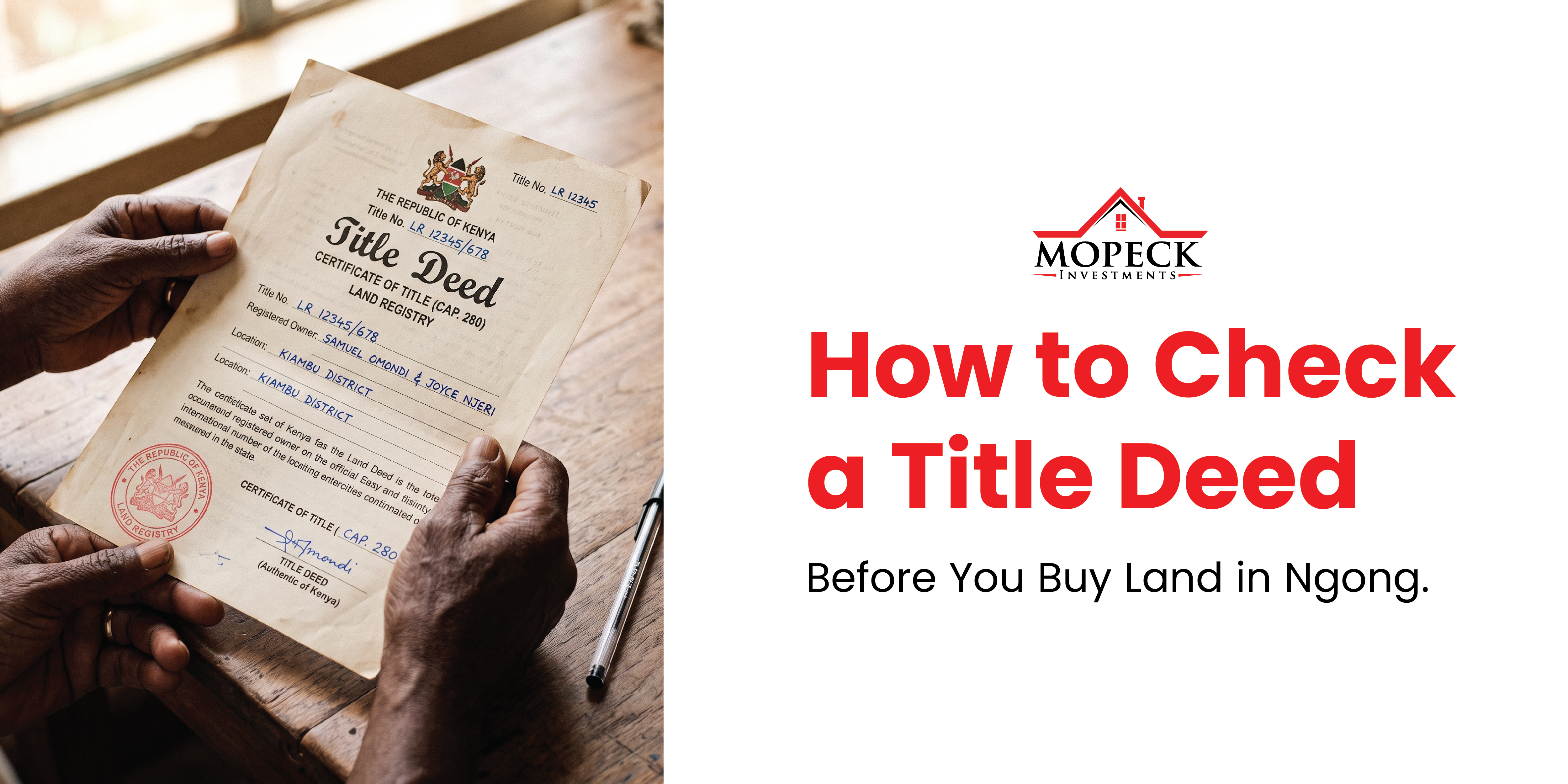
Title & Ownership Issues- Always conduct a land search at Ardhi House and verify ownership.
Fraudulent Sellers- Work only with reputable, registered agents like Mopeck Investments.
Poor Location Choice- Focus on areas near infrastructure and population hubs.
Legal Documentation Errors- Hire a licensed conveyancing lawyer for contracts and transfers.
Infrastructure Delays- Choose areas included in official county spatial plans or national projects.
✅ Due Diligence Checklist
Verify title and ownership
Inspect the land physically
Check zoning and development plans
Confirm access roads and utilities
Work with trusted sellers like Mopeck Investments
Seek legal and tax advice
Legal Note: This article is for informational purposes only. Always consult a qualified lawyer or tax advisor before completing a land transaction in Kenya.
Where to Buy: Best Counties for Land Investment in Kenya
Kiambu County — Close to Nairobi, with growing estates in Ruiru, Juja, and Kikuyu.
Kajiado County — Affordable plots near expanding expressways in Kitengela, Isinya, and Ngong.
Machakos County — Home to Konza Technopolis, Kenya’s “Silicon Savannah.”
Nakuru County — Strong industrial growth and urban expansion in Lanet and Pipeline.
Kisumu County — Western hub with port revival and improved roads.
Mombasa & Coast Region — Ideal for tourism, holiday homes, and mixed-use developments.
Ngong: A Case Study in Land Banking Success
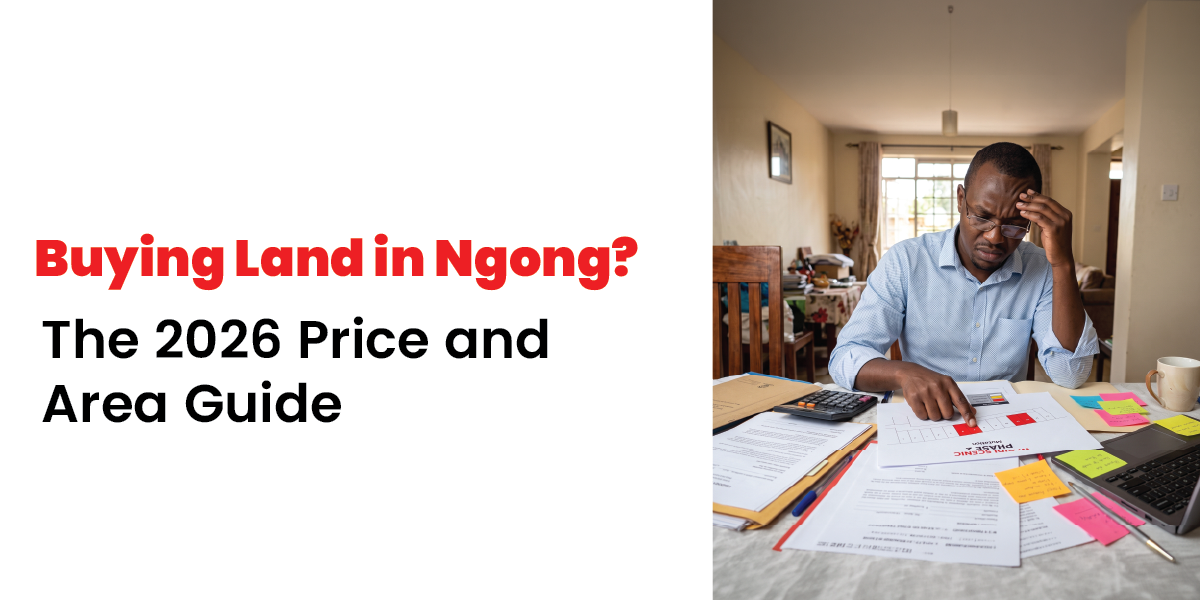
Ngong — located along the Ngong Road corridor on the Nairobi–Kajiado border — is one of Kenya’s top-performing real estate markets.
📈 Land Price Trends
+21.4% appreciation in 2023 → Average KSh 35 million per acre (Hass Consult)
2012–2023: Value rose from ~KSh 7.8M to ~KSh 35M — a 350%+ increase
2025: Slight dip of −1.9% to ~KSh 39M per acre (Mwakilishi, 2025)
These figures show that even modest investors who bought in early have enjoyed significant long-term gains.
Why Ngong Stands Out
Proximity to Karen, Kiserian, and the Southern Bypass
Improved road network (Ngong–Kiserian & Ngong–Suswa roads)
Expanding residential demand from Nairobi professionals
Planned sewer and water infrastructure upgrades
Mopeck Investments: Affordable Land Opportunities in Ngong
At Mopeck Investments, we make land banking accessible through genuine, titled plots in Ngong’s fastest-growing neighbourhoods:
🌿 Waridi Scenic Estate, Ngong — KSh 1.2 million per plot
Scenic location, ready titles, well-graded access roads.🌄 Faraja Phases 3 & 4, Ngong — KSh 850,000 per plot
Affordable plots near social amenities and major infrastructure routes.
These projects sit in the heart of Ngong’s high-growth zone — giving investors a low-entry, high-potential opportunity to participate in one of Kenya’s most dynamic real estate markets.
How Mopeck Investments Supports Your Journey
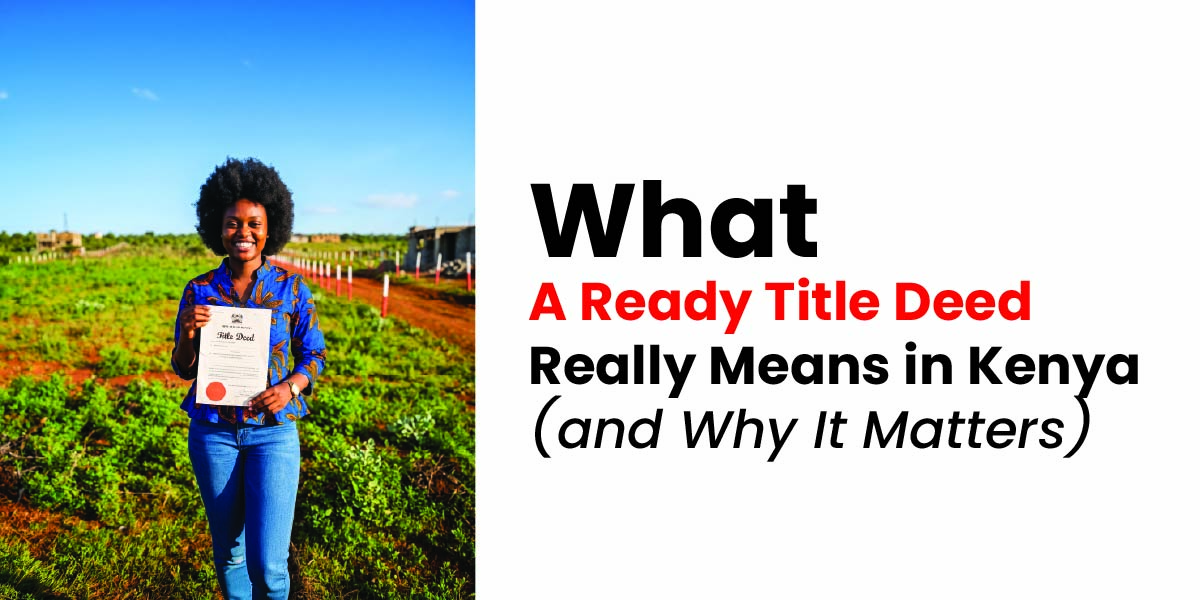
Verified plots with ready title deeds
Guided site visits and investment advice
Assistance with legal documentation and land transfer
Virtual tours and escrow support for diaspora investors
Access to upcoming projects in Nairobi, Kiambu, Kajiado, and Nakuru
At Mopeck Investments, we prioritise trust, transparency, and tailored support to help you invest with confidence.
Ready to bank land in one of Kenya’s fastest-growing corridors?
📞 Call or WhatsApp Mopeck Investments today on +254 797 887 887 for:
✅ A free land valuation or consultation
✅ Your property catalogue (Waridi Scenic & Faraja Phases 3 & 4)
✅ A guided or virtual site visit
Own land in Ngong today and watch your investment grow tomorrow.